
Taking the Long View
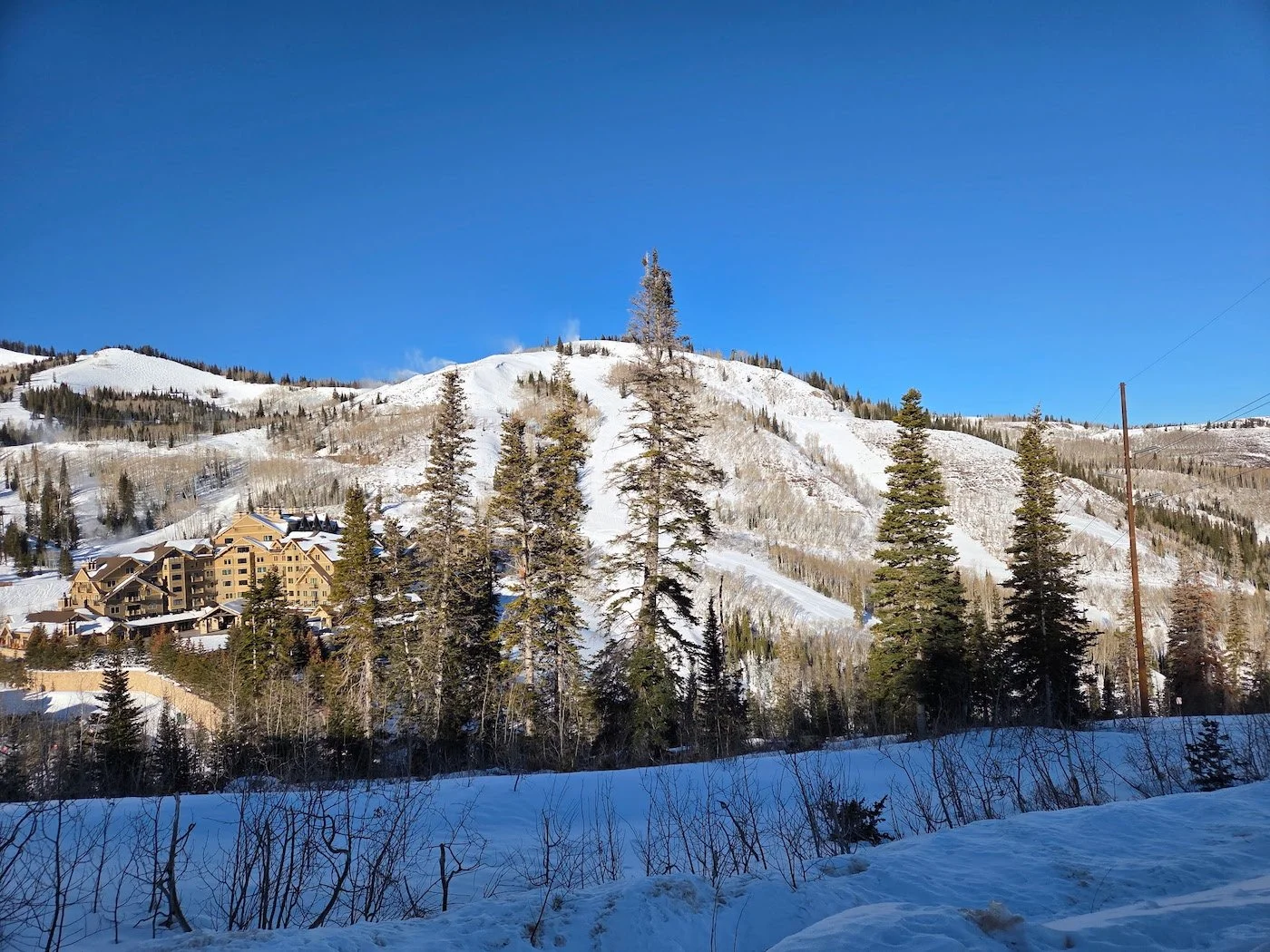
Utah. Photo by Myra McCrickard
“What you see depends not only on what you look AT, but also, where you look FROM.”
~ James Deacon
This breathtaking vista of a lodge set in the Wasatch Mountains near Park City, Utah, was sent to me from friends who were vacationing in the area last week. It seems to be a common experience that when we’re standing in front of towering mountains or listening to pounding waves at the sea, we feel smaller, somehow, and our troubles feel less significant.
In my last post, I wrote about how even a short getaway can not only refresh us, but help us change our outlook on life. Whether it’s to a different state or another country, travel allows us to briefly disconnect from our lives and to be transformed in some way.
Alas, our vacations are typically over too soon, and before we know it, we’re immersed in our routines once again, but hopefully we are not the same as when we left. Ideally, we are changed for the better by our adventures and can retain at least some of our expansive feelings even after our re-entry, especially when national and world events seem overwhelming as they do of late.
Fortunately, we don’t actually have to get away to find relief from our troubles; we have the capacity to step outside of ourselves in our mind’s eye when we need to.
I’ve written before about ways we can disconnect and reduce our stress by using mindfulness techniques, focused breathing, and gratitude practices.
Another way to tap back into those peaceful feelings is to take some time to think about how we fit into the bigger picture—not just in our relationships, in our families, or at work, but also as it relates to our place in the universe.
I came across two articles this week that stirred some feelings of universal connection in me. Perhaps these transcendent ways of looking at ourselves will do the same for you.
Through the Lens of History
A cave painting discovered in Indonesia has been dated to 67,800 years ago. This “oldest ever” example of cave art, a stenciled outline of a hand, predates similar artwork believed to be made by Neanderthals 15,000 years later in Europe. Apparently “the creator, a Homo sapiens, moved their hand while blowing or spitting a mouthful of red pigment on the limestone cave to create a negative, claw-like image.” The symbolic imagination employed was “the same skill needed to understand language, religion, and science,” according to the BBC science correspondent who wrote the article. The finding upends previous theories about the capabilities of early humans.
I’ve been interested in archeology and ancient peoples ever since I read the prehistoric novel The Clan of the Cave Bear in the early ‘90s. Author Jean M. Auel’s imaginings of the daily life and struggles of human beings tens of thousands of years ago touched me deeply. It boggles the mind to think that roughly 2,500 generations ago, humans much like us were creating art. And even more so to think that we are all descendants of those early peoples.
Through the Lens of Space
Last week the Artemis II rocket was rolled to the pad at Cape Canaveral in Florida ahead of its historic mission to launch astronauts around the moon in early February. That story led me to a video about a phenomenon called the “Overview Effect,” a shift in consciousness which takes place for astronauts who have viewed Earth from space. In the video, several former space travelers talk about the beauty and fragility of our planet, but also of a profound, spiritual sense of oneness that arises from seeing our planet as a whole rather than a body made up of separate continents and countries. To a person, they describe being moved to tears by the sense of awe that overcomes them.
Stories like these can provide context for our difficulties.
As humans, we are more connected to each other than we think, through both time and place. This sense of oneness or wholeness can give us peace. We might not be able to travel to Indonesia to see ancient handprints on a cave wall, or view the Earth from space, but in our everyday lives, we do have the ability to shift our perspective by broadening our view. My takeaways from these interesting stories were two-fold:
1. There are always other people who have struggled as we have.
Much as we have evolved, in many ways, we aren’t that different from our ancient predecessors, and our trials often mimic theirs. Pain, heartbreak, frustration, disgust. They felt all those things as we do. And also, excitement, joy, and love. This reminds us that we are all one family.
2. There is always another way to look at what we’re going through.
We get frustrated when we’re too close to our problems. Sometimes we need to pull back and take the long view to see things clearly. Although we can’t always get away physically, we can back away for a moment to gain perspective in order to see an issue with fresh eyes.
When you need a break, especially during these troubled times in the dark days of winter, think about how you can transport yourself in your mind’s eye to a place of inner peace. I wish you well.
Affectionately,
Elaine