
Making Intentional Changes in Our Personalities
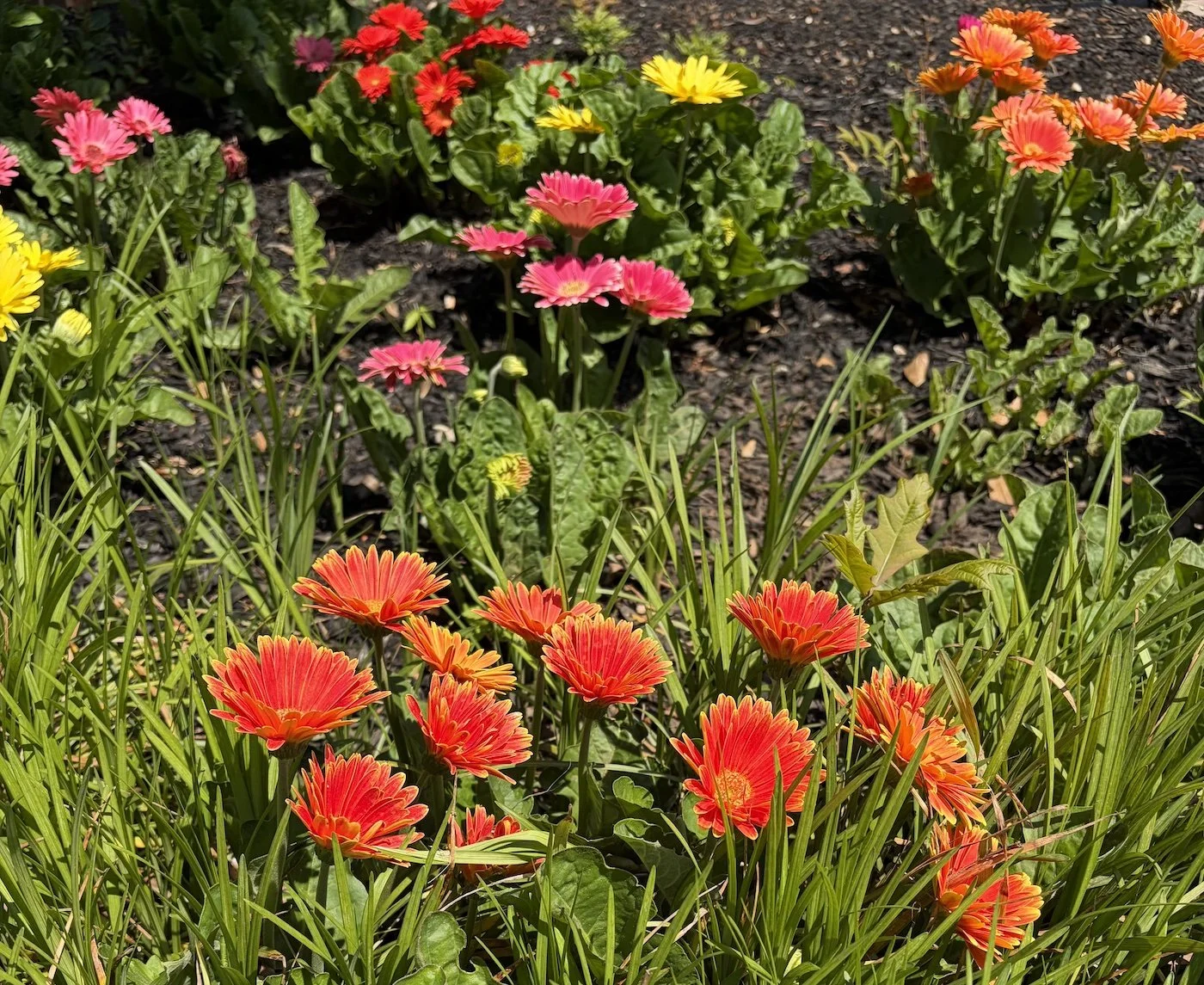
Photo by Elaine Klonicki
“Recognizing that you are not where you want to be is a starting point to begin changing your life.”
~ Deborah Day
I’ve been fascinated with the idea of personality development since I was in high school. Coming from such a big family, I have long wondered what makes us both similar and different from other people, and perhaps more importantly, why.
When I was first studying psychology in college, I was taught that our personalities, defined by psychologists as “our characteristic ways of thinking, feeling, and behaving,” were relatively stable by the age of five. Early researchers believed that the rapid brain growth and socialization occurring before kindergarten acted as the "set-point" for all later behavior.
Since every parent I know describes their very young kids based on their dominant personality traits (“my emotional one,” “my happy-go-lucky one,” “my cautious one”), that tracks to some degree. At the time I first learned it, though, the age of five just seemed too young to me for the assignment of life-long traits. Since then, it hasn’t aligned with my lived experience.
Recently, my siblings and I have been discussing how much several of our grown children have changed over the years. With seventeen in our kids’ generation on my side of the family, we have a pretty good sample size for observation. Now in their forties and fifties, a few of the more assertive kids have become more docile, the withdrawn ones have come out of their shells, the ones seemingly lacking in ambition in high school have become high achievers in middle age.
I’m happy to report that my suspicion was right. It turns out that the newer scientific studies are backing up what my siblings and I have intuited.
Just as we have learned in the past decade that our brains are so much more malleable than what we originally thought, recent studies are showing that our personalities are not as fixed as once believed.
During the course of our adult lives, there are change agents that can have a surprisingly strong influence on us, impacting our growth and personality development:
-Spouses/partners
-Friends and friend groups
-Educational experiences
-Jobs and coworkers
-Volunteer opportunities
-Where we live and travel
-Our physical health
-Intentional self-development (therapy/reading)
In some cases, people undergo such wholesale changes, their loved ones hardly recognize them afterwards. This typically happens when they are exposed to very strong religious, philosophical, or political figures or groups, especially when they are in vulnerable states.
Generally, though, change is more gradual and nuanced. It occurs as a result of what we’ve been through, and also of the aging process itself.
Probably our most stable traits are the ones closely associated with our biology. Constitutional tendencies such as whether we’re nervous or calm, cautious or adventurous, sedentary or active, and even morning or night people tend to remain stable.
Behavioral traits such as thoughtfulness, conscientiousness, and adaptability are more malleable.
One of the studies I mentioned above offers some insights into the circumstances under which intentional, or what the authors call Volitional Personality Change (VPC), is likely to occur. The authors determined that two conditions must be present: 1) people must desire to change their personality traits or trait-related behaviors, and 2) people must believe they are able to change their personality traits. That’s it.
If you want to change, and you believe you can, then you can!
That said, change is not necessarilly easy or quick. The study suggests that “…interventions aimed at facilitating VPC should be concrete, feasible, intensive, and persist a considerable amount of time.”
Cognitive behavioral strategies can work, with or without therapy, if we take the time to examine our thinking, patterns, and behavioral tendencies and then try on new patterns and responses that are different than what we’re used to.
Sustained change is incremental. Every little change makes the next change possible.
This possibility is explored in a TED talk, “The Power of Personality Change,” by clinical psychologist Shannon Sauer-Zavala, who says that for many people, it is their self-limiting beliefs that hold them back. For example, believing that “we’re just disorganized” can keep us from studying up on ways to be more systematic.
She makes the case that although it can be fun and useful at times to take personality quizzes that categorize us into different personality “types,” assigning types to ourselves can also be limiting. Using her own inspiring journey as an example of how change can occur, she stresses the downside of believing we are a certain way without the ability to alter ourselves.
Her takeaway is that we should let our dreams dictate the traits we develop, not the other way around.
In other words, we should decide who we want to be and what we want to do, and then adjust our personalities to fit the requirements of those roles.
Dr. Sauer-Zavala points to two important factors that can affect our growth:
Positive reinforcement. No matter whether it’s internal or external, reinforcement increases the likelihood we’ll engage in the behavior again. When trying to change a specific behavior, for extra motivation, you may want to enlist a friend to join in cheering you on.
Adjusting how we see ourselves. If we view ourselves as a person with positive traits, it can be a self-fulfilling prophecy as we adjust our behavior to fall in line with our desired identity. Just be sure to allow your loved ones some time to adjust to the new you.
Sometimes it takes a bit of time for science to catch up to something we know intuitively. Several of the psychologists who authored the new studies pointed out that there is much more work to be done to fully understand personality change. I see these initial findings as a positive and hopeful beginning.
If you’ve been feeling the need to make some changes in your life and need some inspiration, check out this anthem called “Unwritten” by Natasha Bedinfield. (The theme song might be familiar to you if you were a fan of The Hills, an MTV reality series in the early 2000s.)
As the song says, our lives truly are still unwritten!
Affectionately,
Elaine